Amazon · The cut itself
Find Guanciale or its closest English equivalent
Naming and trim vary by seller — check the listing against the guide above before you order.
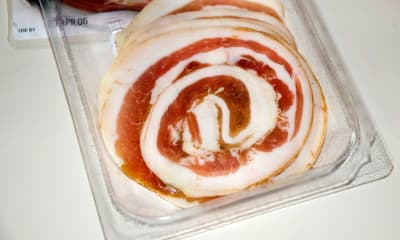
Guanciale
Guanciale is known in English as Pork cheek.

Popo le Chien, CC BY-SA 4.0, via Wikimedia Commons — Guanciale_closeup_(cropped).jpg
Cured pork jowl — the traditional fat ingredient in Roman pasta dishes (carbonara, amatriciana, gricia). Salt-cured for one to two weeks, then air-dried for several months with black pepper or chili. Higher fat content and more delicate, gelatinous texture than pancetta. Renders into a glassy fat that coats pasta perfectly. Pancetta is sometimes substituted, but Roman cooks consider that a compromise — guanciale's fat melts at lower temperatures and binds the sauce differently.
| Country | Name | Notes |
|---|---|---|
| 🇺🇸United States | Guanciale | |
| 🇬🇧United Kingdom | Guanciale | |
| 🇲🇽Mexico | Guanciale | |
| 🇦🇷Argentina | Guanciale | |
| 🇫🇷France | Guanciale | |
| 🇪🇸Spain | Guanciale | |
| 🇵🇹Portugal | Guanciale | |
| 🇧🇷Brazil | Guanciale | |
| 🇮🇹Italy | Guancialeprimary | Cured pork jowl; the traditional fat ingredient for Roman carbonara, amatriciana, and gricia. |
| 🇩🇪Germany | Guanciale |
Amazon · The cut itself
Naming and trim vary by seller — check the listing against the guide above before you order.
Guanciale
Select a primal to see its cuts
$$ · everyday prep, trimming, and carving
Slicing steak, trimming small amounts of fat, chopping aromatics, and general kitchen work.
Victorinox Fibrox Pro 8-Inch Chef's Knife
Every Thursday: one cut like Guanciale, its names around the world, the best substitute, one dish, and one useful tool.
Free. No password. Unsubscribe anytime.