Spanish butchery traditions vary by region — Galicia's beef culture, Catalonia's charcuterie, Andalusia's Iberian pork, Basque pintxos and chuletón — but share a vocabulary shaped by centuries of curing, roasting, and slow-braising unique to the Iberian peninsula. The Iberian black pig (cerdo ibérico) anchors Spain's most prized pork tradition: pluma, presa, secreto, lagarto, lomo, jamón ibérico de bellota — each cut precisely named, dry-cured for months or years.
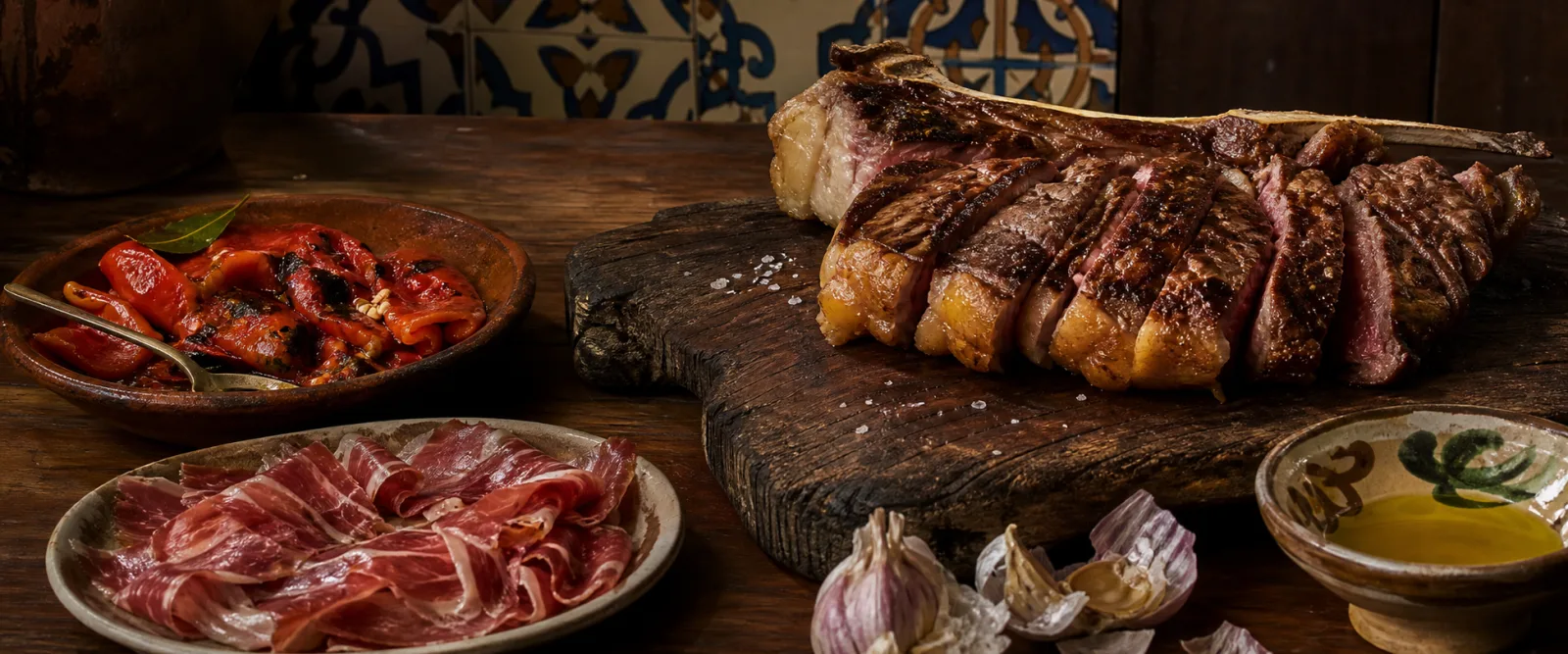
Spanish beef nomenclature differs from Mexican and Argentine Spanish: solomillo for tenderloin, lomo alto for ribeye, cadera for rump. The chuletón — a thick bone-in rib steak, often from old dairy cows aged for tenderness — is the centrepiece of Basque and northern Spanish steakhouse culture. Curing, charcuterie, and aged meats define Spanish butchery as much as fresh cuts; the country's culinary identity is inseparable from its cured-pork traditions.
Popular Spanish translations
Recipes for Spanish cuts
Buy these cuts online
Spain cuts your local butcher may not carry, from sellers that ship.
As an Amazon Associate we earn from qualifying purchases.