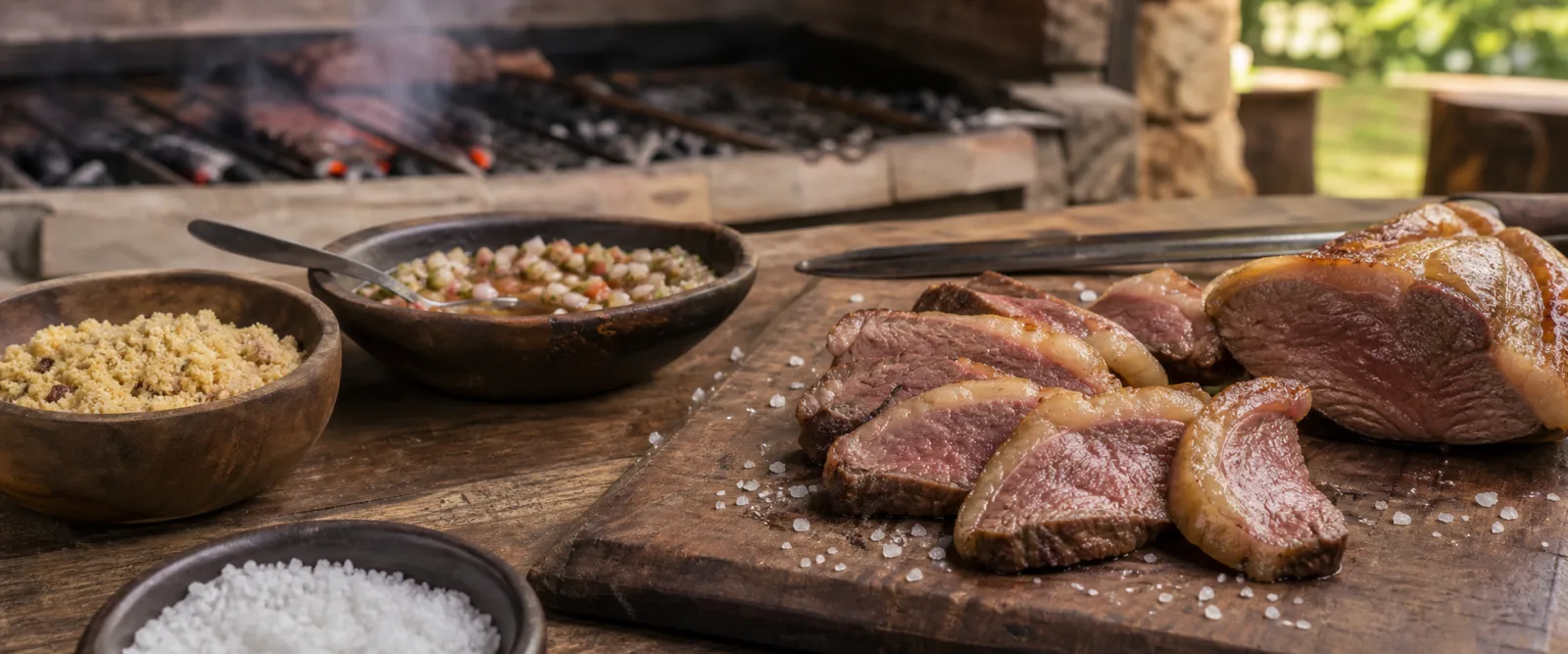
Brazil's churrasco tradition has developed a distinctive vocabulary for beef, with many cuts unique to Brazilian butchery and many preparations unknown elsewhere. Picanha (the rump cap, threaded onto a sword skewer over coals), maminha (tri-tip), fraldinha (flank/bottom-sirloin flap), cupim (the hump muscle of zebu cattle, slow-roasted for hours), alcatra (rump steak), filé mignon, contrafilé — the rodízio churrascaria runs through this canon as a relay of skewered cuts.
Brazilian Portuguese cut names often differ significantly from European Portuguese: alcatra is broader in Brazil, picanha is the central cut of Brazilian grilling but historically obscure in Portugal. Brazilian butchery is shaped by Bos indicus (zebu) cattle as much as European breeds, giving cuts like cupim that simply don't exist in any other tradition. Beef dominates, but the country also has rich charcuterie traditions in southern regions shaped by Italian, German, and Polish immigration.
Popular Brazilian Portuguese translations
Recipes for Brazilian Portuguese cuts
Buy these cuts online
Brazil cuts your local butcher may not carry, from sellers that ship.
As an Amazon Associate we earn from qualifying purchases.