$$ · braised beef, lamb neck, pot roasts, and stews
Turn a tough cut tender in one pot
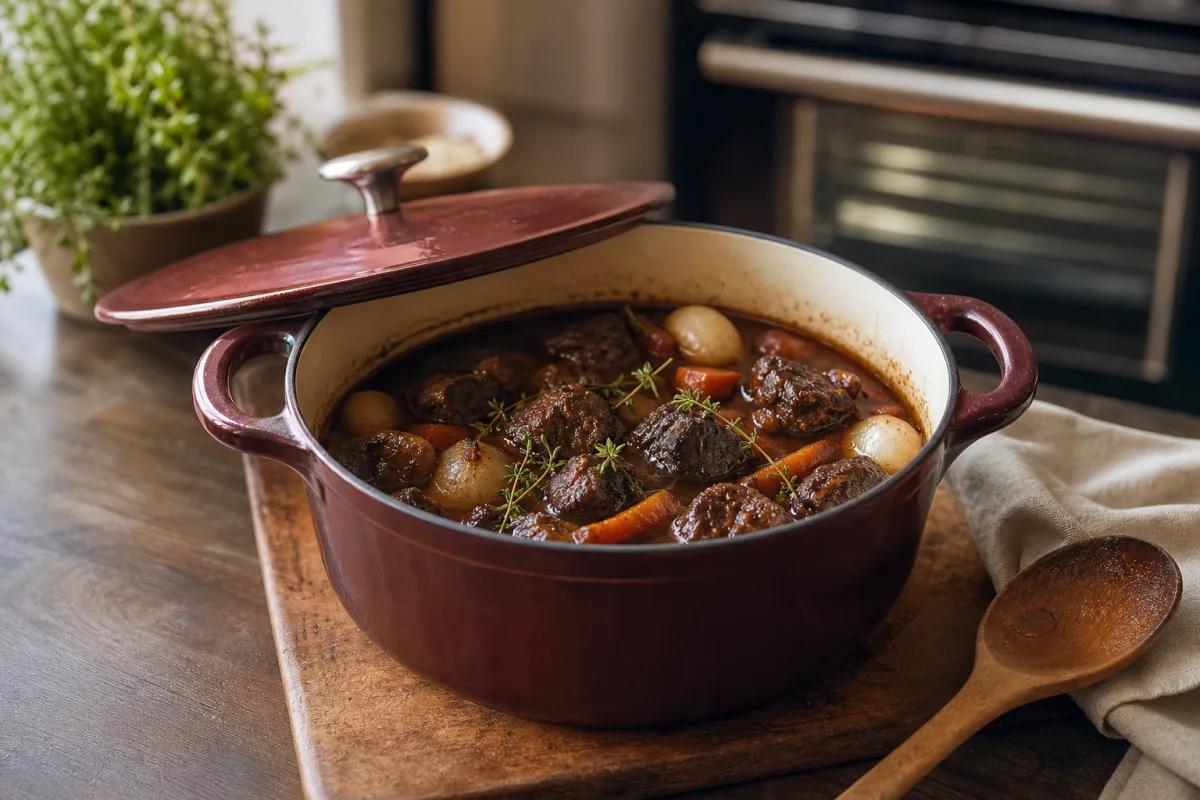
Browning meat on the stovetop, then braising it slowly in the oven.
Lodge 6-Quart Enameled Cast Iron Dutch Oven
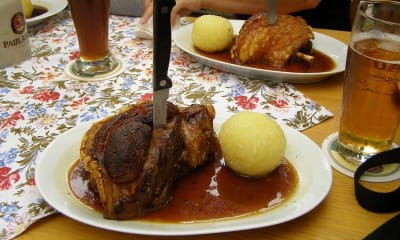
Jambonneau is known in English as Pork knuckle.

Marianne Casamance, CC BY-SA 3.0, via Wikimedia Commons — Jamboneau_laqué_au_miel.jpg
The smaller cured-and-cooked French pork hock — the part of the leg between the knee and the foot, sold either fresh, salt-cured, or cooked (boiled then often glazed and oven-finished). Distinct from *jarret de porc* (the fresh, larger hock used for stews and braises): the jambonneau is more cured-and-cooked, presented as a finished charcuterie product or as the centerpiece of an Alsatian *choucroute garnie*. Two main retail variations: *jambonneau cru* (raw, salt-cured for cooking at home) and *jambonneau cuit* (already cooked, often coated in chapelure or honey-glazed). A staple French *bistrot* dish — served with Puy lentils, mash, sauerkraut, or in a simple pickle-and-mustard plate.
| Country | Name | Notes |
|---|---|---|
| 🇫🇷France | Jambonneauprimary | Cured-and-cooked French pork hock; sold raw (jambonneau cru) or cooked (jambonneau cuit). Distinct from fresh jarret de porc, which is uncured and used for stews. |
Select a primal to see its cuts
$$ · braised beef, lamb neck, pot roasts, and stews
Browning meat on the stovetop, then braising it slowly in the oven.
Lodge 6-Quart Enameled Cast Iron Dutch Oven
Every Thursday: one cut like Jambonneau, its names around the world, the best substitute, one dish, and one useful tool.
Free. No password. Unsubscribe anytime.