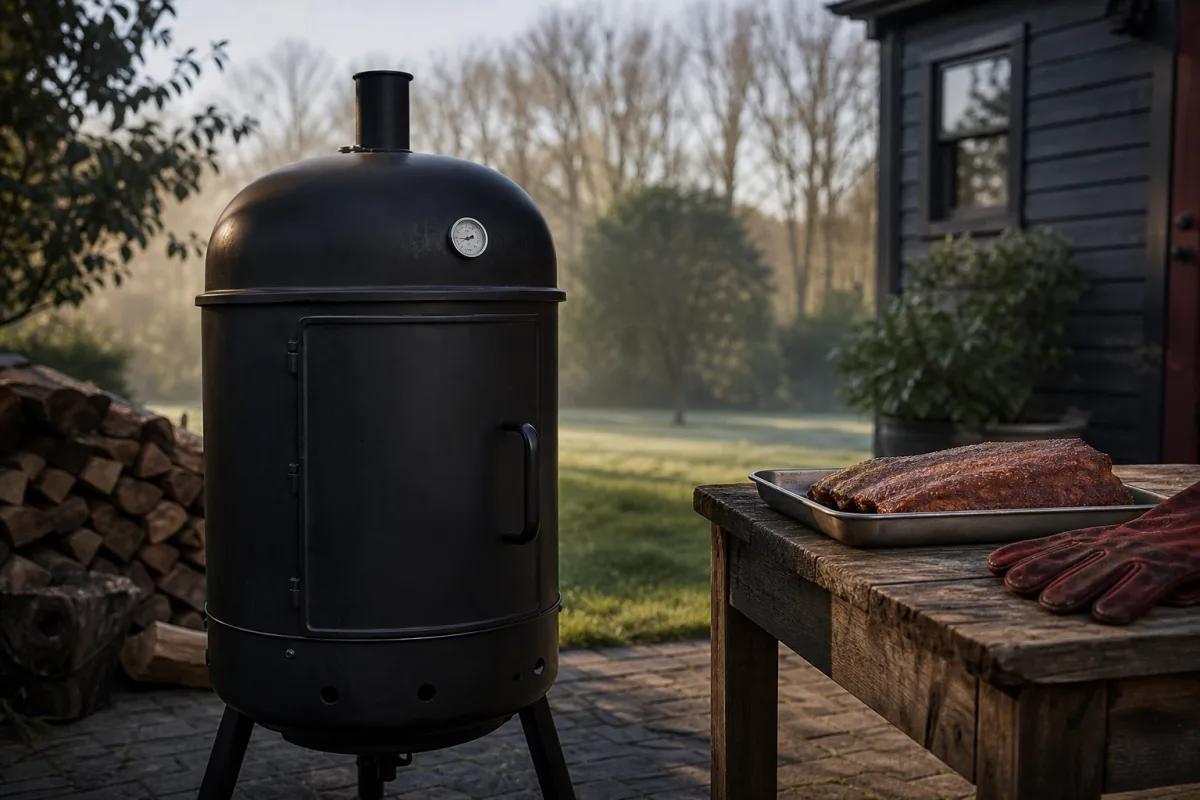
$$$ · brisket, ribs, pork shoulder, and long smoke cooks
Hold a steady 225°F for twelve hours
Low-and-slow barbecue where stable heat matters more than speed.
Weber Smokey Mountain 18-Inch Charcoal Smoker
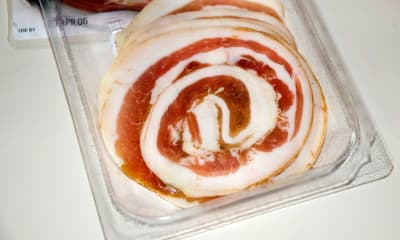
Bauchspeck is known in English as Speck.

S. John, Elsterwerda, CC BY-SA 3.0, via Wikimedia Commons — Räucherspeck_SJohn_Eda_IMG_20200414_204203.jpg
Germany's smoked pork belly — cured with salt and aromatics (juniper, caraway, pepper, sometimes coriander) then cold-smoked over beech for 2–4 weeks. Sometimes called *Räucherspeck* ("smoked Speck"); sliced thin and served as charcuterie, diced into *Speckwürfel* for hearty soups (Erbsensuppe, Linseneintopf) and one-pot dishes (Choucroute / Sauerkraut), or used as a *Bardierung* wrap on lean roasts. Distinct from Italian Speck Alto Adige (which has a beech-smoke profile but is dry-cured for longer and more aged), from Italian pancetta (no smoke), from American streaky bacon (sweeter cure, more pronounced smoke), and from French lard fumé (different aromatics in the cure). A Mitteleuropean charcuterie staple — without it, much of southern German and Austrian cooking would lose its distinctive depth.
| Country | Name | Notes |
|---|---|---|
| 🇺🇸United States | Speck | Loanword on US specialty markets; can refer either to German Bauchspeck or to Italian Speck Alto Adige depending on context. |
| 🇬🇧United Kingdom | Speck | |
| 🇩🇪Germany | Bauchspeckprimary | Cured-and-smoked pork belly; sometimes called *Räucherspeck*. Cured with juniper, caraway, pepper; cold-smoked over beech 2–4 weeks. |
Select a primal to see its cuts
$$$ · brisket, ribs, pork shoulder, and long smoke cooks
Low-and-slow barbecue where stable heat matters more than speed.
Weber Smokey Mountain 18-Inch Charcoal Smoker
Every Thursday: one cut like Bauchspeck, its names around the world, the best substitute, one dish, and one useful tool.
Free. No password. Unsubscribe anytime.