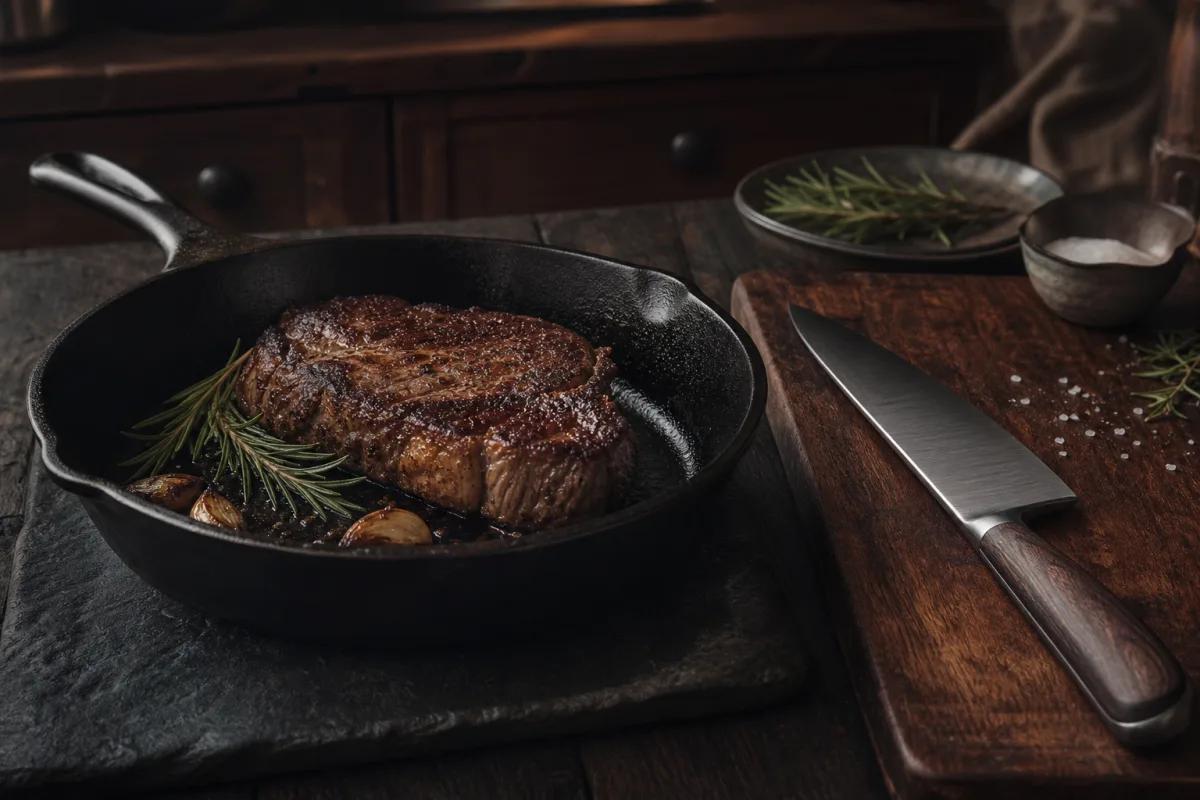
$$ · everyday prep, trimming, and carving
Slice against the grain cleanly every time
Slicing steak, trimming small amounts of fat, chopping aromatics, and general kitchen work.
Victorinox Fibrox Pro 8-Inch Chef's Knife
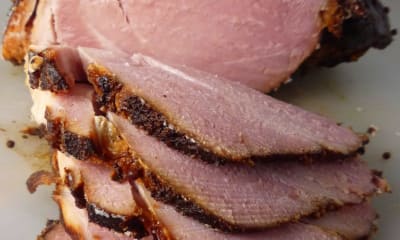
Schwarzwälder Schinken is known in English as Black Forest ham.
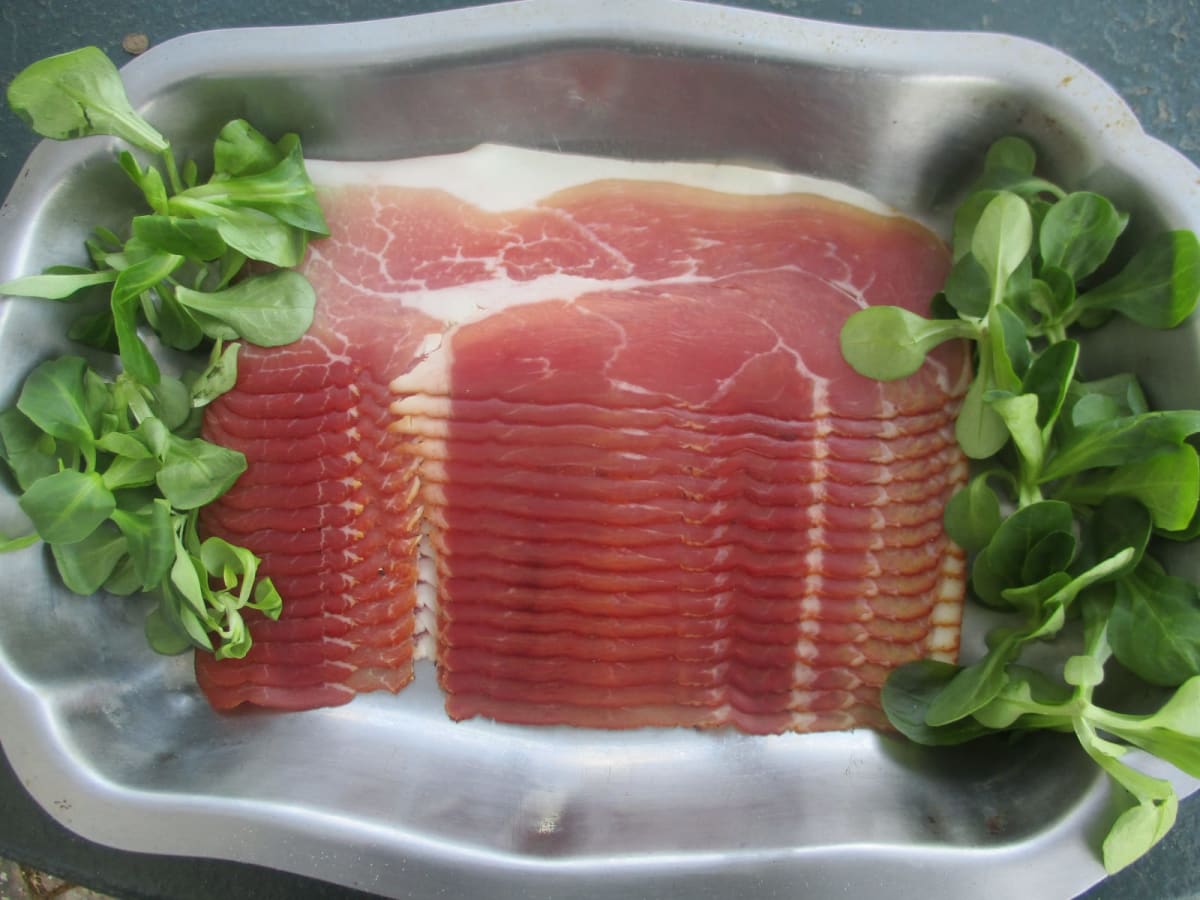
Thomon, CC BY-SA 4.0, via Wikimedia Commons — Jambon_fumé_de_Forêt_Noire.jpg
Germany's PGI-protected Black Forest ham, cured and cold-smoked in the Black Forest region of Baden-Württemberg. The rear leg is dry-salted with a spice rub (juniper, garlic, coriander, pepper), aged for several weeks, then cold-smoked over fir and pine wood for one to several weeks at low temperatures. The smoke gives the exterior its characteristic dark, almost black colour and pine-resin aroma; the interior is deep red and intensely flavoured. Distinct from Italian prosciutto (no smoke), French Bayonne ham (different salt source, no smoke), and Spanish jamón ibérico (different breed, longer cure, no smoke). Sliced thin and served with bread, as a charcuterie staple, or in *Schwarzwälder Kirschtorte* tradition (paired with cherries).
| Country | Name | Notes |
|---|---|---|
| 🇺🇸United States | Black Forest ham | Universally used English term; appears on US deli counters and charcuterie boards. |
| 🇬🇧United Kingdom | Black Forest ham | |
| 🇫🇷France | Jambon de la Forêt-Noire | Sometimes the German loanword "Schwarzwälder Schinken" on French specialty menus. |
| 🇪🇸Spain | Jamón de la Selva Negra | |
| 🇵🇹Portugal | Presunto da Floresta Negra | |
| 🇧🇷Brazil | Presunto da Floresta Negra | |
| 🇮🇹Italy | Speck della Foresta Nera | Italian usage borrows German "Schwarzwälder Schinken" or translates as "speck della Foresta Nera". |
| 🇩🇪Germany | Schwarzwälder Schinkenprimary | PGI-protected since 1997; cold-smoked over fir and pine wood, the smoke gives the exterior its distinctive dark colour. |
Select a primal to see its cuts
$$ · everyday prep, trimming, and carving
Slicing steak, trimming small amounts of fat, chopping aromatics, and general kitchen work.
Victorinox Fibrox Pro 8-Inch Chef's Knife
Every Thursday: one cut like Schwarzwälder Schinken, its names around the world, the best substitute, one dish, and one useful tool.
Free. No password. Unsubscribe anytime.