Cabillaud in English is Cod. It belongs to the Gadidae family; the names below show how the same fish is sold across international markets.
Cabillaud is fresh cod in English. French usually calls the same fish morue after it has been salted or dried.
Also called
🇺🇸🇬🇧Cod🇲🇽🇦🇷🇪🇸Bacalao fresco🇵🇹🇧🇷Bacalhau fresco🇮🇹Merluzzo🇩🇪Kabeljau

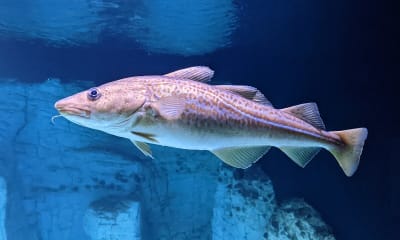
Wilhelm Thomas Fiege / CC BY-SA 4.0
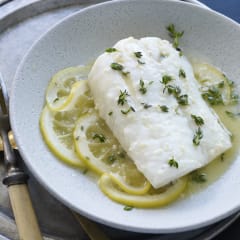
Fresh Atlantic cod (*Gadus morhua*) as it's sold in French and northern-European fishmongers — firm, white-fleshed, mild, and flaking into large pearly leaves when cooked. The same species that becomes salted Morue (Bacalhau in Portuguese) when cured for months, but treated as a different culinary entity in fresh form: cabillaud rôti with hollandaise, cabillaud poché à l'huile d'olive, dos de cabillaud en croûte d'herbes, and the bistro classic cabillaud sauce vierge are built around its mild profile and clean separation. Once cured into Morue, the fish reaches a different shelf in the same shop; the recipes change too — brandade, accras, bacalhau à brás. The naming convention reflects this: in modern French, cabillaud always means fresh, morue almost always means cured.
| Country | Name | Notes |
|---|
| 🇺🇸United States | Cod | Atlantic cod sold fresh — distinct from salt cod (bacalao). |
| 🇬🇧United Kingdom | Cod | British fish-and-chips uses fresh cod; the salted form is rare in UK kitchens outside specialty shops. |
| 🇲🇽Mexico | Bacalao fresco | Less common in Mexico than in Spain; mostly imported from Northern Europe. |
| 🇦🇷Argentina | Bacalao fresco | |
| 🇫🇷France | Cabillaudprimary | Refers strictly to the fresh fish in modern French — once salted/dried, it becomes morue. |
| 🇪🇸Spain | Bacalao fresco | Spanish term distinguishing fresh from salted bacalao (which is the dominant form in Spain). |
| 🇵🇹Portugal | Bacalhau fresco | Rare in Portugal, where the cured bacalhau dominates fish counters; fresh cod is almost always sold under this qualified name. |
| 🇧🇷Brazil | Bacalhau fresco | |
| 🇮🇹Italy | Merluzzo | Italian for fresh cod — distinct from baccalà (salt-cured) and stoccafisso (air-dried). |
| 🇩🇪Germany | Kabeljau | German for fresh Atlantic cod — distinct from Klippfisch (the dried-and-salted form). |
$129.00–$325.00 · Free US shipping (except Hawaii) · Alaska Gold Seafood
Wild Pacific cod, when the Atlantic stock is the problem
- ·Longline-caught Gadus macrocephalus
- ·Boneless 6 oz portions
- ·Individually vacuum-sealed and frozen
- ·5, 10 or 20 lb box
Wild Alaska Pacific Cod
Affiliate link — CarneAtlas may earn a commission at no extra cost to you. Price checked 31 Aug 2026.
Bacalhau
Same species (Gadus morhua), but treated as different culinary products. Cabillaud is fresh and mild; bacalhau/morue is salted and dried for months, with a concentrated flavour and chewy texture. The dishes built around each are distinct — cabillaud poché vs morue brandade.
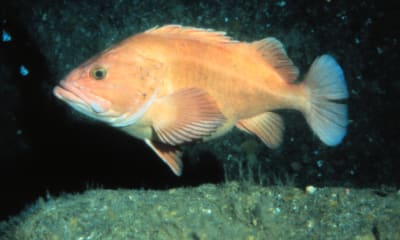
Rockfish
Both are lean, mild, white-fleshed fish used interchangeably for frying, tacos and chowder — rockfish flakes smaller and holds its shape better in a stew, cod breaks into larger, softer sheets.
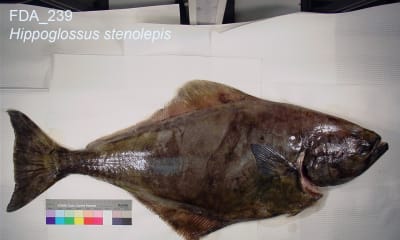
Halibut
Both are lean white fish used for the same roasting and pan-searing jobs, and cod is the usual affordable stand-in for halibut. Cod flakes larger and softer and breaks apart if moved; halibut is denser and holds a steak shape, so a halibut recipe transferred to cod wants gentler handling.
Sablefish
Named as a cod and priced like nothing of the sort. Sablefish carries roughly fifteen percent oil against cod's one, so they behave differently under heat: cod dries the moment it passes done, sablefish stays silky. Substituting cod into a black cod recipe means cutting the cooking time and watching it.
Lingcod
Lingcod is the Pacific coast's answer to cod and the two are used for the same frying, taco and chowder jobs. Lingcod is denser and large-flaked and keeps its shape in a hot pan; cod is softer and breaks into wider, more delicate sheets.