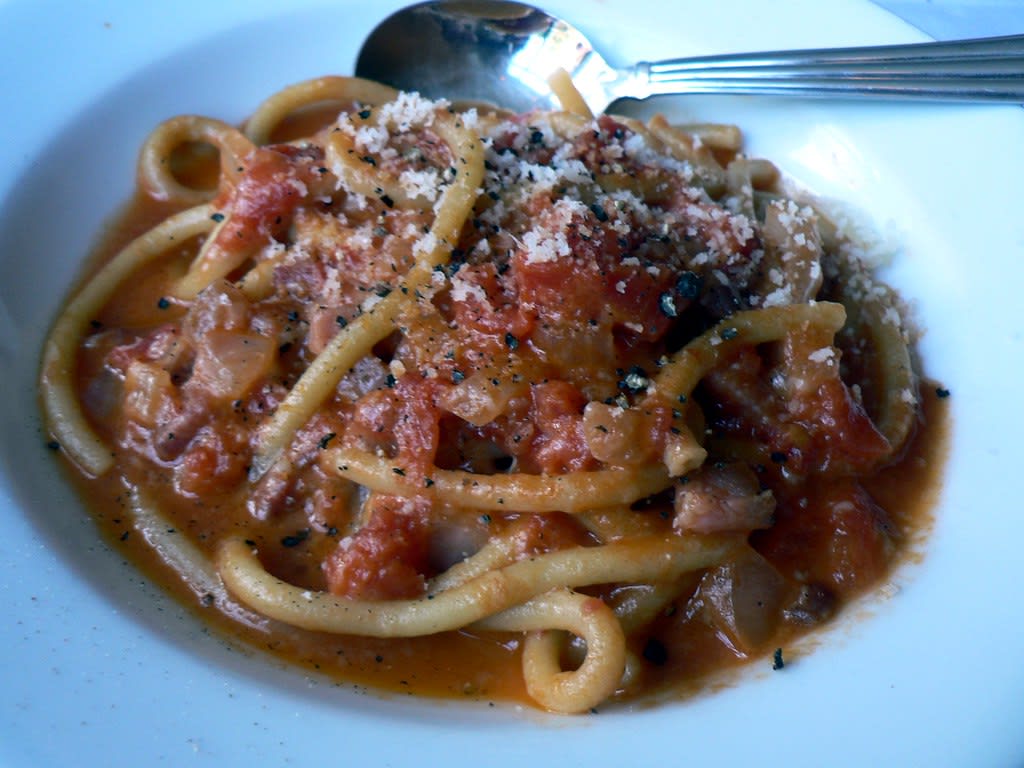
Roman tradition: guanciale, San Marzano tomato, Pecorino, chilli, and bucatini. The dish from Amatrice in Lazio. The guanciale's cured-cheek fat is what makes it — pancetta is acceptable but not authentic.
Serves 4Prep 10 minCook 25 min
What to ask for
This recipe calls for Guanciale. Can't get it where you are?
Ingredients & method
Ingredients
150 g guanciale, cut into 1 cm thick batons
400 g bucatini
1 can (400 g) San Marzano tomatoes, hand-crushed
1 small dried chilli, crumbled (or 1/2 teaspoon chilli flakes)
60 ml dry white wine
80 g Pecorino Romano, finely grated, plus extra to serve
Salt for the pasta water
Freshly cracked black pepper
Method
1Render the guanciale in a wide cold pan over medium heat until the fat is liquid and the meat is just crisping at the edges, about 10 minutes. Lift the guanciale out with a slotted spoon and reserve.
2Add the wine to the rendered fat and let it bubble down for 1 minute, scraping the pan.
3Add the chilli and the crushed tomatoes. Simmer 12 to 15 minutes until thickened and rust-coloured. Season with salt.
4Meanwhile, cook the bucatini in heavily salted water to one minute under al dente.
5Stir the guanciale back into the sauce. Drain the pasta (reserve a mug of water) and tip into the sauce.
6Toss vigorously over heat for 1 minute, adding splashes of pasta water if needed to make a glossy emulsion.
7Off the heat, add half the Pecorino and toss again. Serve with extra Pecorino and pepper at the table.
Cook this well
$$ · everyday prep, trimming, and carving
Slice against the grain cleanly every time
Slicing steak, trimming small amounts of fat, chopping aromatics, and general kitchen work.