Porter Road · The cut itself
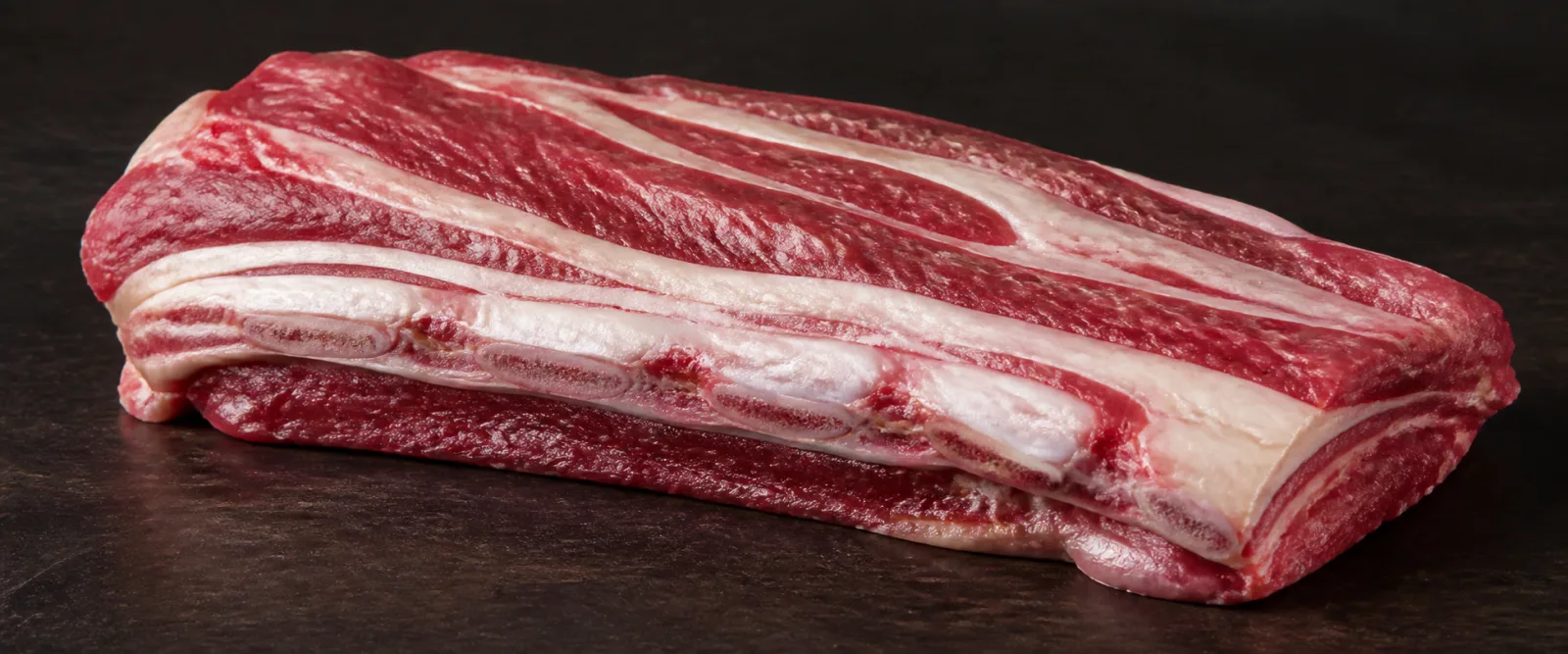
Buy Brisket from a butcher who cuts it
Dry-aged and cut to order by a US butcher — this is the cut itself, not a search result.
Whole brisket

Josh Evnin from Chicago, IL, USA, CC BY-SA 2.0, via Wikimedia Commons — Brisketphoto.jpg
Brisket comes from the lower chest of the animal and consists of two muscles — the flat and the point — separated by a layer of fat. It is one of the toughest cuts due to the high amount of connective tissue, but transforms into meltingly tender meat after 12 or more hours of low, slow cooking. It is the cornerstone of Texas barbecue and Jewish holiday cooking.
| Country | Name | Notes |
|---|---|---|
| 🇺🇸United States | Brisketprimary | The definitive Texas barbecue cut, smoked low and slow for 12-16 hours |
| 🇬🇧United Kingdom | Brisket | |
| 🇲🇽Mexico | Pecho | |
| 🇦🇷Argentina | Pecho | |
| 🇫🇷France | Poitrine | |
| 🇪🇸Spain | Pecho | |
| 🇵🇹Portugal | Peito / Maçã do peito | Peito is the broader pt-PT brisket term; maçã do peito ("apple of the breast") refers more specifically to the brisket point — the rounder, fattier deckle end. Both terms used at Portuguese talhos; the maçã is sometimes priced separately. |
| 🇧🇷Brazil | Peito | Used in Brazilian churrasco, slow-cooked over wood fire |
| 🇮🇹Italy | Punta di petto | |
| 🇩🇪Germany | Rinderbrust |
Porter Road · The cut itself
Dry-aged and cut to order by a US butcher — this is the cut itself, not a search result.
Whole brisket
Select a primal to see its cuts

$187.97 · Ships free in the US · Grill Masters Club
Baller Brisket Bundle
Affiliate link — CarneAtlas may earn a commission at no extra cost to you. Price checked 31 Aug 2026.
Every Thursday: one cut like Brisket, its names around the world, the best substitute, one dish, and one useful tool.
Free. No password. Unsubscribe anytime.