Amazon · The cut itself
Find Spare ribs or its closest English equivalent
Naming and trim vary by seller — check the listing against the guide above before you order.
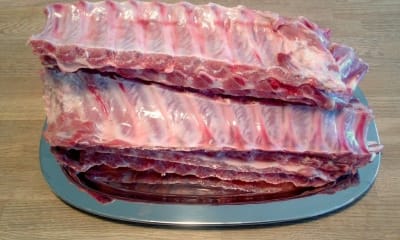
Pork spare ribs

Thogru, CC BY-SA 3.0, via Wikimedia Commons — Spareribs mit Groessenvergleich.jpg
Spare ribs come from the belly side of the rib cage, below the baby back ribs, and include more bone and cartilage but also more fat and flavor. They are larger and meatier than baby back ribs but require longer cooking to become tender. When trimmed to a rectangular shape they are called St. Louis style ribs. Best slow-smoked or braised and then finished on the grill.
| Country | Name | Notes |
|---|---|---|
| 🇺🇸United States | Spare ribsprimary | |
| 🇬🇧United Kingdom | Spare ribs | |
| 🇲🇽Mexico | Costillas de cerdo | |
| 🇦🇷Argentina | Asado de cerdo | |
| 🇫🇷France | Travers de porc | Côtes levées is the Québec term. |
| 🇪🇸Spain | Costillas de cerdo | |
| 🇵🇹Portugal | Entrecosto | |
| 🇧🇷Brazil | Costela de porco | |
| 🇮🇹Italy | Costine di maiale | |
| 🇩🇪Germany | Spare Ribs | German butchers also call these 'Schälrippen' or 'Bauchrippen'; the loanword is more common at retail. |
Amazon · The cut itself
Naming and trim vary by seller — check the listing against the guide above before you order.
Pork spare ribs
Select a primal to see its cuts

$109.99 · Ships free in the US · Grill Masters Club
Rack Attack Rib Kit
Affiliate link — CarneAtlas may earn a commission at no extra cost to you. Price checked 31 Aug 2026.
Every Thursday: one cut like Spare ribs, its names around the world, the best substitute, one dish, and one useful tool.
Free. No password. Unsubscribe anytime.