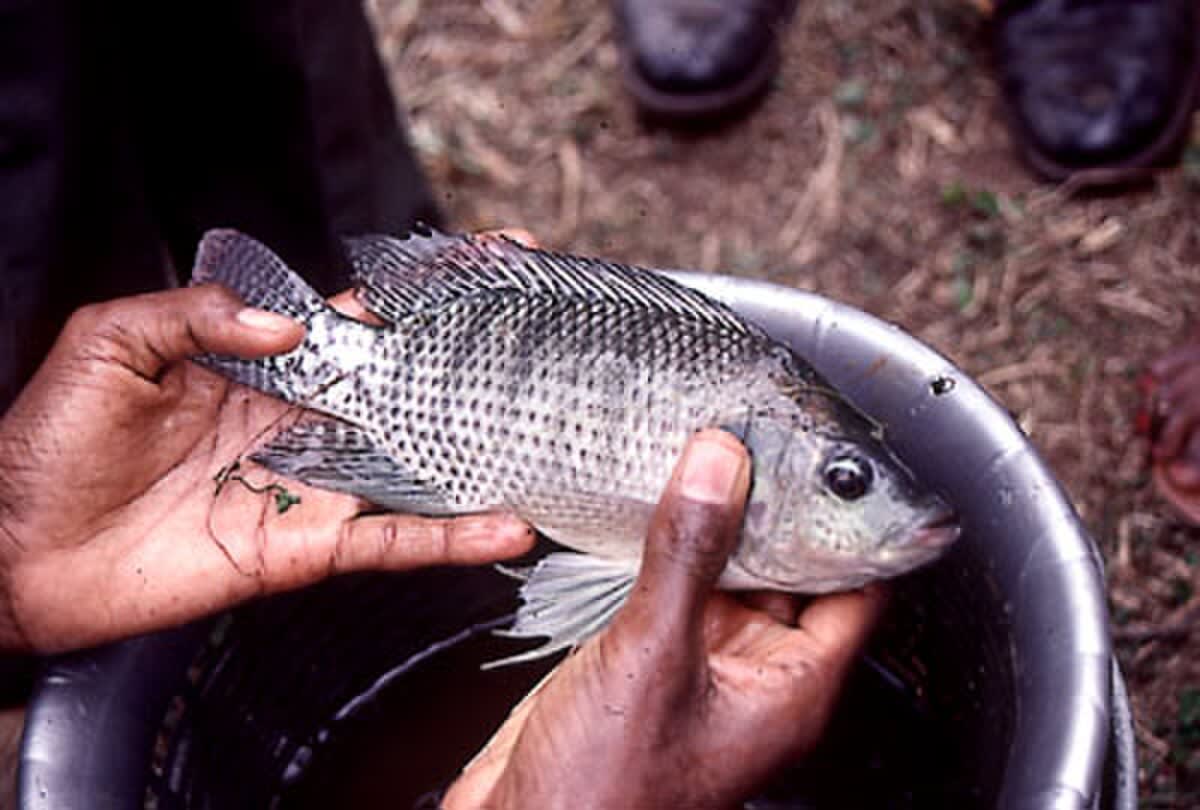
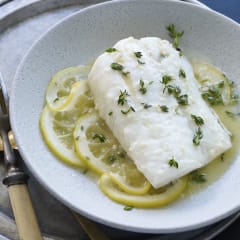
Mojarra in English is Tilapia. It belongs to the Cichlidae family; the names below show how the same fish is sold across international markets. Mojarra often means tilapia on Latin American menus and fish counters, but regionally the name can also refer to other cichlids or mojarras.
Bjørn Christian Tørrissen, CC BY-SA 3.0, via Wikimedia Commons
Have a photo of Mojarra from your fishmonger? and we'll credit you.
Tilapia is the world's most farmed fish and one of the most widely consumed, particularly in Latin America and the US. In Mexico it is known as mojarra and is eaten fried whole, in ceviches, and in soups. Its white flesh is mild, boneless, and versatile. It is inexpensive and adapts well to a wide range of flavors, making it a staple in everyday cooking across the Americas.
Is mojarra always tilapia?
No. The everyday market meaning and the biological family name overlap, but they are not identical.
Mexican menus and markets
Mojarra commonly refers to farmed tilapia, especially when sold whole for frying.
Fish identification
Mojarras is also the English common name for fish in the Gerreidae family, which are not tilapia.
Best buying question
Ask whether the fish is tilapia and, when origin matters, request the species or farm source.
How to buy mojarra
Mojarra on a Mexican or Central American counter is farmed tilapia, and it is farmed at enormous scale — tilapia is the most farmed food fish in the world. That is why it is cheap, why it is the same size every week, and why it is always available.
Farming is also where the one real quality question comes from. Pond-raised tilapia can pick up an earthy, muddy note from the water it grew in; fish raised in cleaner or flowing water does not. It is not a safety issue and it cooks out to some extent, but it is the difference between a good mojarra frita and a dull one, and it is worth asking where the fish came from.
Whole or fillet
Whole at plate size, roughly 400–600 g, is what mojarra frita is built on. Fillets are the same fish boned out and are the usual supermarket form.
Freshness
Clear eyes, red gills, firm flesh, and no strong smell. A whole fish shows you all of this; a fillet does not, which is a reason to buy it whole.
Ask for
Mojarra in Mexico and much of Central America, tilápia in Brazil, tilapia almost everywhere else.
Affiliate link — CarneAtlas may earn a commission at no extra cost to you. Price checked 31 Aug 2026.
What it tastes like
Very mild, slightly sweet, and lean. The flesh is white, soft rather than firm, and low in fat, which means it takes on whatever it is cooked with instead of asserting itself. That is exactly why it works fried with lime and salsa, or in a broth, and why it is a poor choice if you want the fish itself to be the flavour.
The fillets are effectively boneless, which is a large part of why it became a weeknight staple across the Americas.
The three ways it is usually cooked
Mojarra frita
The whole fish, scored to the bone on both sides so the heat reaches the middle, seasoned, and fried until the skin and fins are crisp. Served with tortillas, lime, and a salsa. The scoring is the part people skip and it is the part that matters.
Ceviche
Cubed fillet cured in lime juice with onion, chilli and coriander. The mildness that is a weakness in a fillet on a plate is an advantage here.
Caldo
Poached in a tomato and chilli broth with vegetables. A whole fish or steaks on the bone give the broth more body than fillets.
When to buy it
Farmed year round, with no meaningful season. Price and quality track the farm rather than the calendar.