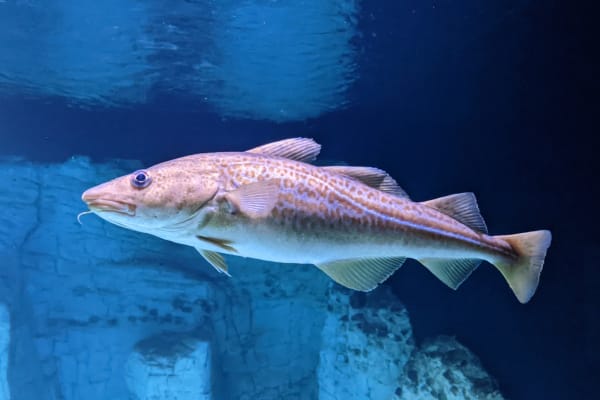
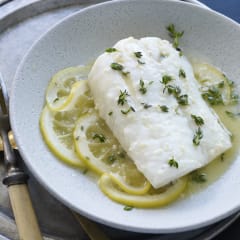
Cabillaud and Halibut are different fish, but they're close enough in the kitchen to stand in for one another.
Gadidae
Cabillaud
Fresh Atlantic cod (*Gadus morhua*) as it's sold in French and northern-European fishmongers — firm, white-fleshed, mild, and flaking into large pearly leaves when cooked. The same species that becomes salted Morue (Bacalhau in Portuguese) when cured for months, but treated as a different culinary entity in fresh form: cabillaud rôti with hollandaise, cabillaud poché à l'huile d'olive, dos de cabillaud en croûte d'herbes, and the bistro classic cabillaud sauce vierge are built around its mild profile and clean separation. Once cured into Morue, the fish reaches a different shelf in the same shop; the recipes change too — brandade, accras, bacalhau à brás. The naming convention reflects this: in modern French, cabillaud always means fresh, morue almost always means cured.
Full guide →
Pleuronectidae
Halibut
Halibut is the largest of the flatfish and the one most people meet as a thick white steak rather than a thin fillet — a Pacific halibut can pass 200 kg, so it is butchered into cross-cut portions with the grain running through them like a piece of meat. The flesh is snow white, very lean and unusually firm, in large sheets that hold together on a grill where sole or plaice would fall apart. That leanness is also the trap: there is almost no fat to protect it, and a halibut portion taken two minutes too far goes from silky to dry and cottony with no warning. Cook it to just-opaque and rest it. Two species are sold under the name and they are close enough to be used interchangeably in the kitchen: Atlantic halibut (Hippoglossus hippoglossus), heavily depleted and now mostly farmed, and Pacific halibut (H. stenolepis), line-caught in Alaska and British Columbia under one of the better-managed quota systems in the world. Spanish and Portuguese speakers should watch one distinction carefully: the fletán negro or alabote-da-Gronelândia sold cheaply across southern Europe is Greenland halibut (Reinhardtius hippoglossoides), a different, much oilier, softer fish — not the same thing as the fletán or alabote in this entry, and not a substitute for it in a recipe that wants firm white flesh.
Full guide →Both are lean white fish used for the same roasting and pan-searing jobs, and cod is the usual affordable stand-in for halibut. Cod flakes larger and softer and breaks apart if moved; halibut is denser and holds a steak shape, so a halibut recipe transferred to cod wants gentler handling.
| Country | Cabillaud | Halibut |
|---|
| 🇺🇸United States | Cod | Halibut |
| 🇬🇧United Kingdom | Cod | Halibut |
| 🇫🇷France | Cabillaud | Flétan |
| 🇪🇸Spain | Bacalao fresco | Fletán |
| 🇦🇷Argentina | Bacalao fresco | — |
| 🇲🇽Mexico | Bacalao fresco | Halibut |
| 🇵🇹Portugal | Bacalhau fresco | Alabote |
| 🇧🇷Brazil | Bacalhau fresco | Halibute |
| 🇮🇹Italy | Merluzzo | Ippoglosso |
| 🇩🇪Germany | Kabeljau | Heilbutt |
$129.00–$325.00 · Free US shipping (except Hawaii) · Alaska Gold Seafood
Wild Pacific cod, when the Atlantic stock is the problem
- ·Longline-caught Gadus macrocephalus
- ·Boneless 6 oz portions
- ·Individually vacuum-sealed and frozen
- ·5, 10 or 20 lb box
Wild Alaska Pacific Cod
Affiliate link — CarneAtlas may earn a commission at no extra cost to you. Price checked 31 Aug 2026.
Browse every species in the atlas on the fish index, or identify one from a photo with Identify my cut.