Also called
🇫🇷Flétan🇪🇸Fletán🇵🇹Alabote🇧🇷Halibute🇮🇹Ippoglosso🇩🇪Heilbutt

Pacific halibut (Hippoglossus stenolepis). U.S. Food and Drug Administration, Public domain, via Wikimedia Commons
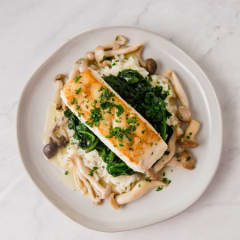
Halibut is the largest of the flatfish and the one most people meet as a thick white steak rather than a thin fillet — a Pacific halibut can pass 200 kg, so it is butchered into cross-cut portions with the grain running through them like a piece of meat. The flesh is snow white, very lean and unusually firm, in large sheets that hold together on a grill where sole or plaice would fall apart. That leanness is also the trap: there is almost no fat to protect it, and a halibut portion taken two minutes too far goes from silky to dry and cottony with no warning. Cook it to just-opaque and rest it. Two species are sold under the name and they are close enough to be used interchangeably in the kitchen: Atlantic halibut (Hippoglossus hippoglossus), heavily depleted and now mostly farmed, and Pacific halibut (H. stenolepis), line-caught in Alaska and British Columbia under one of the better-managed quota systems in the world. Spanish and Portuguese speakers should watch one distinction carefully: the fletán negro or alabote-da-Gronelândia sold cheaply across southern Europe is Greenland halibut (Reinhardtius hippoglossoides), a different, much oilier, softer fish — not the same thing as the fletán or alabote in this entry, and not a substitute for it in a recipe that wants firm white flesh.
| Country | Name | Notes |
|---|
| 🇺🇸United States | Halibutprimary | Pacific halibut is the Alaskan line-caught fish; Atlantic halibut is now largely farmed |
| 🇬🇧United Kingdom | Halibut | |
| 🇲🇽Mexico | Halibut | Sold under the English name in Mexico, mostly landed or imported through Baja California |
| 🇫🇷France | Flétan | Flétan de l'Atlantique or flétan du Pacifique; flétan noir is the separate Greenland species |
| 🇪🇸Spain | Fletán | Do not confuse with fletán negro (Reinhardtius hippoglossoides), Greenland halibut — a softer, oilier and much cheaper fish |
| 🇵🇹Portugal | Alabote | Alabote-do-Pacífico for the Alaskan fish; alabote-da-Gronelândia is the different Greenland halibut |
| 🇧🇷Brazil | Halibute | |
| 🇮🇹Italy | Ippoglosso | Also sold simply as halibut in Italy |
| 🇩🇪Germany | Heilbutt | One of the most familiar premium white fish in Germany; Schwarzer Heilbutt is the Greenland species |
$275.00–$695.00 · Free US shipping (except Hawaii) · Alaska Gold Seafood
Buy halibut thick enough to cook the way it should be
- ·Line-caught Pacific halibut (Hippoglossus stenolepis)
- ·Boneless 8 oz portions
- ·Individually vacuum-sealed, frozen at sea
- ·5, 10 or 20 lb box
Alaska Gold Halibut Portions
Affiliate link — CarneAtlas may earn a commission at no extra cost to you. Price checked 31 Aug 2026.