Congrio and Lotte are different fish, but they're close enough in the kitchen to stand in for one another.
Congridae
Congrio
Congrio is the European conger, a heavy scaleless eel that can exceed two metres and is sold in thick cross-cut steaks rather than fillets. Its reputation is regional and strong: in Chile the caldillo de congrio is close to a national dish, celebrated in Neruda's ode, while in the Basque Country and Galicia it goes into stews and into the dried-and-salted trade. The front half, nearer the head, is the part worth buying — it is meaty, firm and gelatinous, excellent in stews and rice dishes where it thickens the liquid as it cooks. The tail end is dense with fine bones and is usually sold cheaper for stock. Note that the Chilean congrio of restaurant menus is usually not this fish at all but one of several unrelated cusk-eels, a substitution so entrenched that the name has effectively transferred.
Full guide →Lophiidae
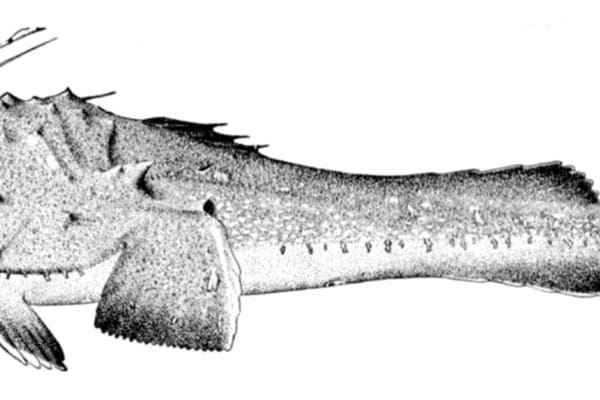
Lotte
Monkfish is an extraordinarily ugly deep-sea fish that is almost entirely sold as its tail — the only edible part widely available at market. Its flesh is dense, meaty, and almost lobster-like in texture, holding up exceptionally well to roasting, grilling, and inclusion in stews and soups. In France it is called lotte and is a bistro staple. In Spain rape is used in a famous garlic sauce.
Full guide →Both are firm, gelatinous, boneless-in-the-middle fish that thicken a stew as they cook — monkfish is meatier and easier to portion, conger cheaper and more flavourful.
| Country | Congrio | Lotte |
|---|
| 🇺🇸United States | Conger eel | Monkfish |
| 🇬🇧United Kingdom | Conger eel | Monkfish |
| 🇫🇷France | Congre | Lotte |
| 🇪🇸Spain | Congrio | Rape |
| 🇦🇷Argentina | Congrio | Rape |
| 🇵🇹Portugal | Congro | Tamboril |
| 🇧🇷Brazil | — | Peixe-sapo |
| 🇮🇹Italy | Grongo | Coda di rospo |
| 🇩🇪Germany | Meeraal | Seeteufel |
Browse every species in the atlas on the fish index, or identify one from a photo with Identify my cut.