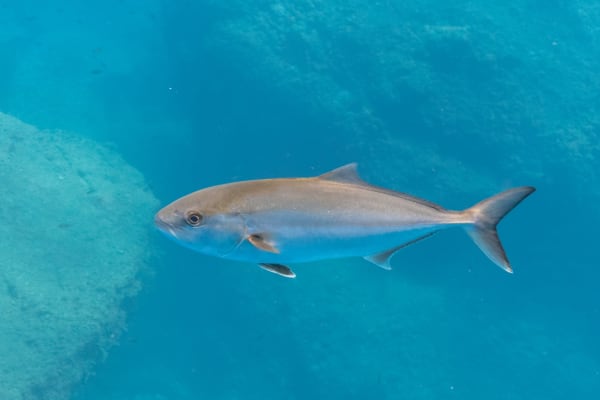
Ricciola and Tuna are different fish, but they're close enough in the kitchen to stand in for one another.
Carangidae
Ricciola
Ricciola is the greater amberjack — a fast, powerful Carangidae of the Mediterranean and warm Atlantic, and one of the few large fish that is genuinely excellent both raw and cooked. Italian kitchens treat it as a premium fish for carpaccio and crudo; Spanish ones, where it is pez limón, grill it in thick steaks or cure it. The flesh is pale, dense and clean-tasting with a high fat content along the belly, which is why the closely related Japanese species is the hamachi of sushi counters. Size matters more than with most fish: small specimens are mild and forgiving, while very large ones can carry parasites and are usually frozen before serving raw. It is farmed increasingly in Spain and Italy. Distinguish it from the various fish called jurel, which are its much smaller relatives in the same family.
Full guide →Scombridae
Tuna
Tuna is the world's most consumed fish by volume, available as fresh steaks, sashimi-grade loins, and canned. Bluefin is the most prized and expensive, used for sashimi and sushi. Yellowfin and albacore are the most commonly sold as fresh steaks. All species have firm, meaty, dark red flesh that becomes lighter when cooked. Grilling, searing rare, and eating raw are the preferred preparations.
Full guide →Both are dense, clean-tasting fish eaten raw as well as seared — amberjack is paler and leaner with a firmer bite, tuna darker and richer.
| Country | Ricciola | Tuna |
|---|
| 🇺🇸United States | Greater amberjack | Tuna |
| 🇬🇧United Kingdom | Greater amberjack | Tuna |
| 🇫🇷France | Sériole couronnée | Thon |
| 🇪🇸Spain | Pez limón | Atún |
| 🇦🇷Argentina | — | Atún |
| 🇲🇽Mexico | — | Atún |
| 🇵🇹Portugal | Charuteiro | Atum |
| 🇧🇷Brazil | — | Atum |
| 🇮🇹Italy | Ricciola | Tonno |
| 🇩🇪Germany | Bernsteinmakrele | Thunfisch |
Browse every species in the atlas on the fish index, or identify one from a photo with Identify my cut.