


$$ · filleting, skinning, and trimming whole fish
Fillet a whole fish without wasting half of it
Following the bones and contours of whole fish with a narrow, flexible blade.
Victorinox Fibrox 8-Inch Flexible Fillet Knife
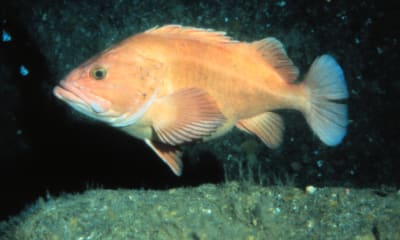
Striped bass is the great fish of the US Atlantic seaboard — anadromous, running from the ocean into the Chesapeake and Hudson to spawn — and throughout Maryland and Virginia it is called simply rockfish, or rock. That local name is the source of a persistent mix-up: it is not the Pacific rockfish of the genus Sebastes, which is an unrelated fish from the opposite coast. The flesh is white, firm and large-flaked, richer and more assertive than cod, and it is at its best cooked whole, roasted on the bone, or seared skin-on so the skin crisps. Nearly all striped bass in the market is farmed hybrid bass, a cross with white bass, sold at plate size; wild striped bass is tightly regulated and largely a sport fishery. It belongs to Moronidae, which makes it a close relative — but not the equivalent — of the European sea bass sold as lubina, loup de mer or branzino. Spanish speakers looking for this fish want lubina rayada, and should be aware that an unqualified "lubina" in Spain means the European fish instead.
| Country | Name | Notes |
|---|---|---|
| 🇺🇸United States | Striped bassprimary | Called rockfish or rock throughout the Chesapeake and Mid-Atlantic — a different fish from Pacific rockfish (Sebastes) |
| 🇬🇧United Kingdom | Striped bass | Imported or farmed; not a British coastal fish |
| 🇲🇽Mexico | Lubina rayada | Fished and farmed along the Baja California coast |
| 🇫🇷France | Bar rayé | Standard in France and Québec, where the Saint Lawrence population was reintroduced |
| 🇪🇸Spain | Lubina rayada | Distinct from plain lubina, which in Spain is the European sea bass (Dicentrarchus labrax) |
| 🇮🇹Italy | Spigola striata | |
| 🇩🇪Germany | Streifenbarsch |
$$ · filleting, skinning, and trimming whole fish
Following the bones and contours of whole fish with a narrow, flexible blade.
Victorinox Fibrox 8-Inch Flexible Fillet Knife
Five questions: name the cut, place it on the animal, and say which country calls it that. A new board every day — no sign-up.
Play today’s puzzle