Besugo and Blackspot seabream are the same fish. Different languages, different markets, one species — so a recipe calling for one works exactly as written with the other.
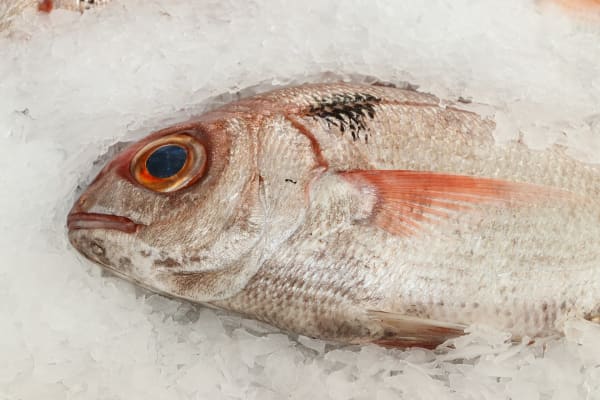
Besugo is the blackspot seabream, and in Spain it is a Christmas fish before it is anything else — besugo a la espalda, split and roasted on the bone, is the Basque and Madrid festive centrepiece, and its price climbs accordingly in December. It is a deeper-water, slower-growing relative of the dorada, and the difference shows on the plate: the flesh is finer, sweeter and more delicate, with a distinct dark spot behind the gill that gives it its name in most languages. Because it grows slowly it is heavily fished and genuinely expensive; much of what is sold cheaply as besugo is a smaller Pagellus relative or imported goraz from the Azores and Madeira, where the fishery is better managed. Buy it whole, on the bone, and roast it simply — it is not a fish that rewards sauce.
What to ask for, by country
One species, one fishmonger’s counter at a time.
| Country | Called |
|---|---|
| 🇺🇸United States | Blackspot seabream |
| 🇬🇧United Kingdom | Blackspot seabream |
| 🇫🇷France | Dorade rose |
| 🇪🇸Spain | Besugo |
| 🇵🇹Portugal | Goraz |
| 🇮🇹Italy | Occhialone |
| 🇩🇪Germany | Rotbrassen |
Browse every species in the atlas on the fish index, or identify one from a photo with Identify my cut.