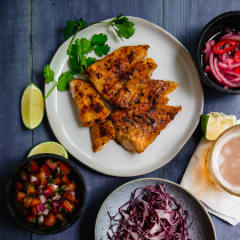
Besugo and Huachinango are different fish, but they're close enough in the kitchen to stand in for one another.
Sparidae
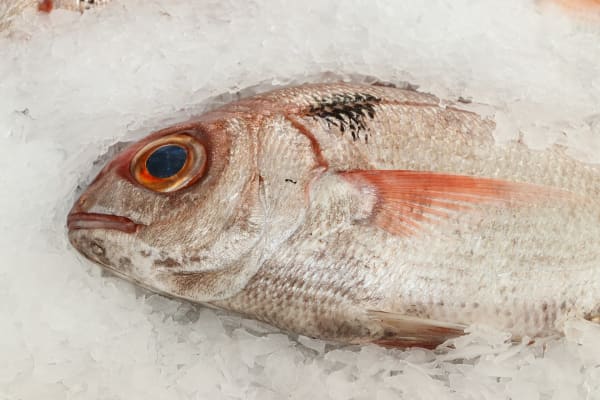
Besugo
Besugo is the blackspot seabream, and in Spain it is a Christmas fish before it is anything else — besugo a la espalda, split and roasted on the bone, is the Basque and Madrid festive centrepiece, and its price climbs accordingly in December. It is a deeper-water, slower-growing relative of the dorada, and the difference shows on the plate: the flesh is finer, sweeter and more delicate, with a distinct dark spot behind the gill that gives it its name in most languages. Because it grows slowly it is heavily fished and genuinely expensive; much of what is sold cheaply as besugo is a smaller Pagellus relative or imported goraz from the Azores and Madeira, where the fishery is better managed. Buy it whole, on the bone, and roast it simply — it is not a fish that rewards sauce.
Full guide →Lutjanidae
Huachinango
Red snapper is a prized firm-fleshed fish from the Gulf of Mexico and Caribbean, with distinctive red skin and sweet, nutty white flesh. In Mexico it is called huachinango and is one of the most iconic fish in the cuisine — most famously prepared a la veracruzana with tomatoes, olives, and chiles. It is also popular grilled whole, deep-fried, and in ceviches across Latin America.
Full guide →Both are premium red-skinned whole-roasting fish with sweet white flesh — red snapper is firmer and more tropical, besugo finer and more delicate.
| Country | Besugo | Huachinango |
|---|
| 🇺🇸United States | Blackspot seabream | Red snapper |
| 🇬🇧United Kingdom | Blackspot seabream | Red snapper |
| 🇫🇷France | Dorade rose | Vivaneau rouge |
| 🇪🇸Spain | Besugo | Pargo rojo |
| 🇦🇷Argentina | — | Pargo colorado |
| 🇲🇽Mexico | — | Huachinango |
| 🇵🇹Portugal | Goraz | Pargo |
| 🇧🇷Brazil | — | Vermelho |
| 🇮🇹Italy | Occhialone | Lutiano rosso |
| 🇩🇪Germany | Rotbrassen | Roter Schnapper |
A fish you can order instead
$245.00–$395.00 · Free US shipping (except Hawaii) · Alaska Gold Seafood
The fish US counters sell as "Pacific red snapper", under its real name
- ·Wild Alaskan Sebastes, longline-caught
- ·Skinless fillets, lean and firm
- ·Vacuum-sealed and frozen
- ·10 or 20 lb box
Alaska Rockfish Fillets
Affiliate link — CarneAtlas may earn a commission at no extra cost to you. Price checked 31 Aug 2026.
Browse every species in the atlas on the fish index, or identify one from a photo with Identify my cut.