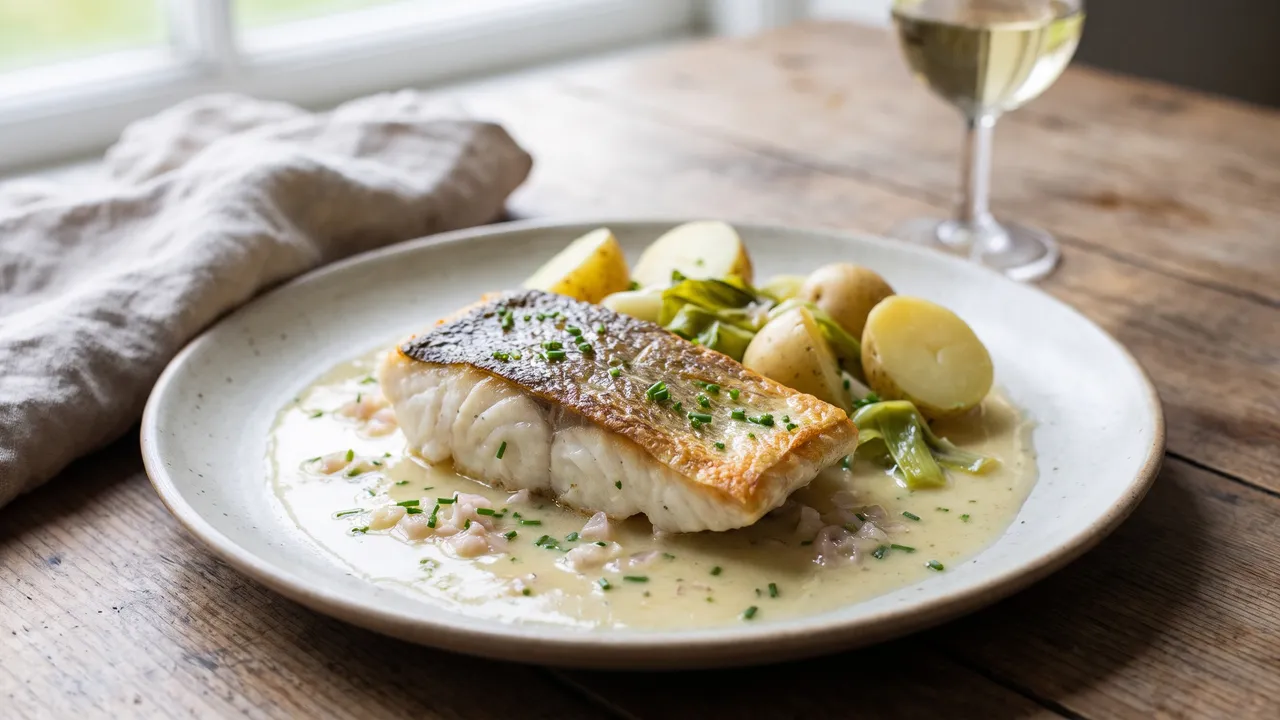
Dos de cabillaud is the thick back fillet of fresh cod, the prime piece that French fishmongers sell separately, and in English it is cod loin. This is the bistro way to cook it: seared skin side down until crisp, finished in the oven so the flakes stay moist, and served with a beurre blanc of shallot, white wine and cold butter.
Serves 4Prep 15 minCook 25 min
Can't find Cabillaud?
Bacalhau — Same species (Gadus morhua), but treated as different culinary products. Cabillaud is fresh and mild; bacalhau/morue is salted and dried for months, with a concentrated flavour and chewy texture. The dishes built around each are distinct — cabillaud poché vs morue brandade.
Rockfish — Both are lean, mild, white-fleshed fish used interchangeably for frying, tacos and chowder — rockfish flakes smaller and holds its shape better in a stew, cod breaks into larger, softer sheets.
Halibut — Both are lean white fish used for the same roasting and pan-searing jobs, and cod is the usual affordable stand-in for halibut. Cod flakes larger and softer and breaks apart if moved; halibut is denser and holds a steak shape, so a halibut recipe transferred to cod wants gentler handling.
Sablefish — Named as a cod and priced like nothing of the sort. Sablefish carries roughly fifteen percent oil against cod's one, so they behave differently under heat: cod dries the moment it passes done, sablefish stays silky. Substituting cod into a black cod recipe means cutting the cooking time and watching it.
Lingcod — Lingcod is the Pacific coast's answer to cod and the two are used for the same frying, taco and chowder jobs. Lingcod is denser and large-flaked and keeps its shape in a hot pan; cod is softer and breaks into wider, more delicate sheets.
Ingredients & method
Ingredients
4 pieces of cod loin (dos de cabillaud), 160 to 180 g each, skin on
Fine salt
1 tablespoon neutral oil
15 g butter
For the beurre blanc: 2 shallots, very finely chopped
100 ml dry white wine, such as Muscadet
50 ml white wine vinegar
1 tablespoon cream (optional, it steadies the sauce)
150 g cold unsalted butter, cut into cubes
Salt and white pepper
Chopped chives, to finish
Method
1Take the cod out of the fridge 15 minutes before cooking. Pat it very dry, salt both sides lightly, and heat the oven to 200 °C (400 °F).
2Start the sauce: simmer the shallots, wine and vinegar in a small pan until only about 2 tablespoons of syrupy liquid remain, 8 to 10 minutes. Add the cream, if using, and take the pan off the heat.
3Heat the oil in an ovenproof frying pan over medium-high heat. Lay the cod in skin side down and press gently for the first 10 seconds so the skin stays flat. Cook 3 to 4 minutes without moving it, until the skin is crisp and golden.
4Turn the pieces over, add the butter, and put the pan in the oven for 4 to 6 minutes, until the centre is just opaque and a knife slides in without resistance, about 52 to 55 °C (125 to 130 °F).
5Finish the sauce while the fish rests: set the shallot pan over very low heat and whisk in the cold butter a few cubes at a time, adding more only as the last has melted into the sauce. It should be thick, pale and glossy. Never let it boil, or it splits.
6Season the sauce with salt and white pepper, and strain it if you want it smooth.
7Spoon the sauce onto warm plates, set the cod on top skin side up, and finish with chives. Serve with boiled potatoes, leeks or spinach.
Cook this well
$$ · filleting, skinning, and trimming whole fish
Fillet a whole fish without wasting half of it
Following the bones and contours of whole fish with a narrow, flexible blade.
Chef's tip Cod is ready when the flakes just begin to separate; past that it turns dry and woolly. A thinner tail piece needs only 2 minutes in the oven. If the beurre blanc splits, whisk a tablespoon of cold water into a clean pan and whisk the broken sauce back in slowly. Haddock, hake (merlu) and pollock loins cook the same way. Salt cod (morue, bacalhau) is a different ingredient and needs a day or more of soaking.
Cook this later?Save the recipe, then keep notes on what worked and what you'd change next time.